
Why Pass-Through Windows Matter for Cleanroom Contamination Control

In controlled environments, cleanroom contamination control depends on more than air systems and cleaning routines. It also depends on how materials move between spaces. Every time supplies, instruments, components, or packaged products are transferred from one room to another, there is a chance to introduce particles or disrupt a controlled process. That is why pass-through windows matter. They create a dedicated transfer point between areas and help facilities move materials more efficiently while supporting cleaner workflows. Clean Room Devices offers pass-through windows designed for clean room and medical environments, including hospitals, pharmacies, surgical rooms, and manufacturing facilities.
One of the biggest advantages of pass-through windows is that they help reduce unnecessary traffic between controlled and non-controlled spaces. Instead of opening doors and moving people in and out of a room for every transfer, staff can move materials through a defined opening in the wall. That more structured process supports cleanroom contamination control because it helps maintain separation between spaces while also improving day-to-day workflow. Clean Room Devices specifically describes its pass-through windows as solutions for transferring materials between clean rooms, packaging rooms, and other controlled areas.
How Pass-Through Windows Help Support Cleanroom Contamination Control
Pass-through windows are useful because they help facilities build a more organized transfer process into the layout of the space. Rather than relying on improvised handoffs, teams can use equipment designed for material movement in controlled environments.
Some of the practical ways they support cleanroom contamination control include:
- creating a defined transfer point between rooms
- helping limit unnecessary personnel movement
- improving separation between clean and adjacent work areas
- supporting smoother workflows in high-transfer environments
These benefits are especially important in settings like hospital pharmacies, surgical instrument wash-up rooms, pharmaceutical manufacturing, and clean room production, all of which Clean Room Devices lists as common applications.
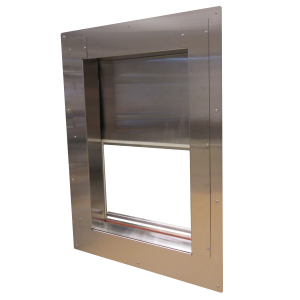
At Clean Room Devices, we offer both manual and automatic models, which is important because different facilities have different transfer needs. Manual pass-through windows can be a strong fit for facilities that want a straightforward and dependable solution. For example, the CRD340 Manual Pass-Through Window is designed for cleanroom environments and is used in hospital instrument wash-up rooms, hospital pharmacies, surgery rooms, and manufacturing facilities. It also features a flush-mounted design that allows for counters on one or both sides, which can help create a cleaner and more practical transfer area.
Automatic models can add another level of consistency and convenience. Clean Room Devices says its electric pass-through windows with shelves use sensors so the window opens and closes automatically when product is placed on the shelf. This type of design can be especially helpful in operations where touch-free transfer and repeatable movement are priorities. In environments where speed and cleanliness both matter, that combination can make automated systems valuable for cleanroom contamination control.
Features That Can Make a Difference
Not every facility needs the same setup, so choosing the right pass-through window matters. Clean Room Devices offers multiple configurations that can support different workflows, including:
- manual or automatic operation
- shelf-equipped models for easier staging and transfer
- flush-mounted designs for counter compatibility
- observation window options for added visibility
- conveyor-compatible systems for more automated movement
That flexibility matters because good cleanroom contamination control is not only about having equipment in place. It is about choosing equipment that fits the way the facility actually operates.
Material choice also plays a role. Clean Room Devices notes that the CRD340 is constructed with 304 stainless steel and 3/16-inch tempered glass, materials selected for durability and cleanroom compatibility. Details like these help support long-term performance in environments where cleanliness, reliability, and repeated use all matter.
A Practical Part of a Controlled Workflow
Pass-through windows do more than add convenience. They help facilities create a cleaner boundary between spaces while keeping materials moving where they need to go. Whether the need is a manual flush-mounted window or an automatic shelf-equipped model, the right setup can support both efficiency and cleanroom contamination control at the same time. For facilities in medical, pharmaceutical, and manufacturing environments, that makes pass-through windows a practical part of a well-managed controlled workflow.
With Clean Room Devices, facilities can take a more thoughtful approach to material transfer as part of a broader cleanroom contamination control strategy. That focus can support cleaner day-to-day operations and stronger long-term process consistency.