Tubing Expander Kit Safety: Why Operator Protection Matters

A tubing expander kit can help make cleanroom tubing work more controlled, repeatable, and efficient, but safety should always be part of the setup. In cleanroom and medical device assembly environments, operators often work with tubing expanders, jaws, foot pedals, and fitting insertion equipment throughout the day. These tools support precision, but they also require careful operation. When a tubing expander kit is used regularly, safety-focused accessories can help protect operators and support a more intentional process.

Why Safety Matters in Expansion

Tubing expansion often involves repetitive motion, controlled pressure, and jaw-operated equipment. The operator may need to open the jaws, position the tubing, activate the equipment, and repeat the process many times during a shift. Even when the equipment is simple to use, repetitive workflows can lead to habits that increase risk.

In a cleanroom setting, production teams usually focus on consistency, cleanliness, and throughput. Those goals matter, but they should not come at the expense of operator protection. A tubing expander kit should support the process from both a quality and safety standpoint. When operators feel confident using the equipment, they can focus more clearly on alignment, tubing placement, and repeatable results.

Common Safety Concerns Around Jaw-Operated Equipment

Jaw-operated equipment can create pinch point concerns if hands are not properly positioned. Operators may also become too comfortable with repeated motion, especially during high-volume tubing assembly. Over time, this can increase the chance of accidental activation, poor hand placement, or rushed movement.

Some common concerns include:

  • Pinch points near the jaws or moving components
  • Accidental activation during repetitive work
  • Operator fatigue from repeated motions
  • Shortcuts that bypass safe operating steps
  • Inconsistent hand placement during tubing setup

In fast-paced environments, teams may look for ways to move faster, but shortcuts can reduce control. For a tubing expander kit, the goal is not just to expand tubing. The goal is to expand consistently while keeping the operator’s hands and workflow protected.

What the Anti-Tie Down Safety Kit Does

tubing expander kit anti tie down safety

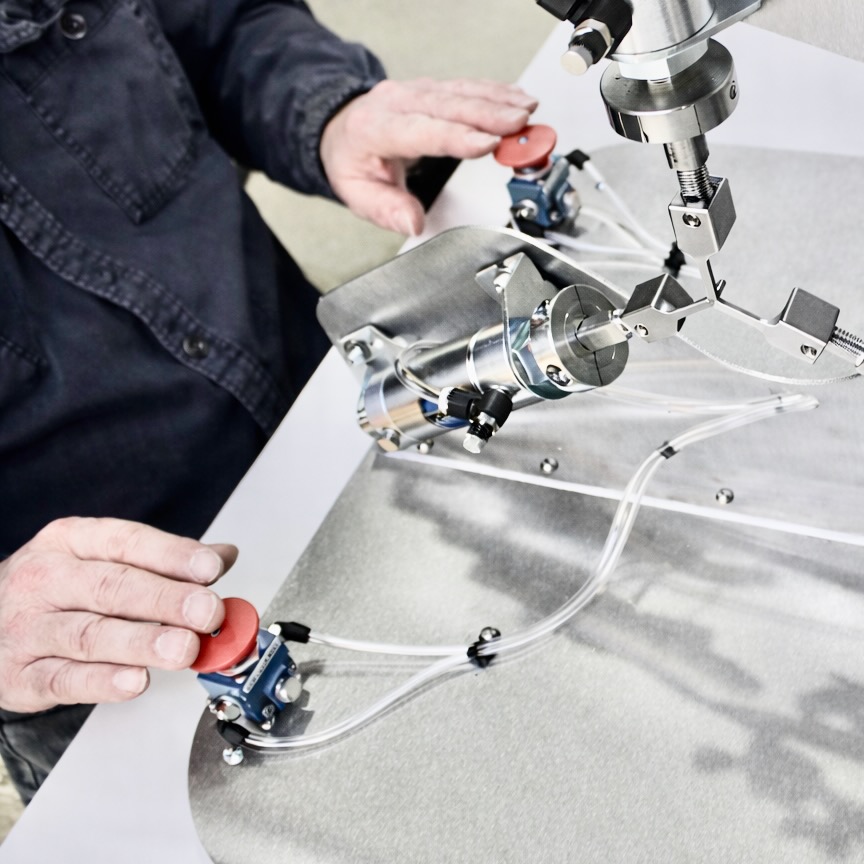
At Clean Room Devices, our Anti-Tie Down Safety Kit is designed to provide an additional level of operator safety. Once the operator depresses the foot pedal to open the jaws, the system requires both buttons to be pressed at the same time to close the jaws.

This two-button requirement helps make the closing action more intentional. Instead of relying on one activation point, the operator must use both buttons simultaneously. For equipment with jaws, that added step can help reinforce safer hand placement and reduce the chance of unintended operation.

When paired with a tubing expander kit, this accessory can be especially useful in environments where operators perform the same task repeatedly. It supports safety without removing the precision and control that cleanroom tubing work requires.

How Safety Accessories Support Better Production

Safety and productivity are closely connected. A safer setup can help reduce interruptions, improve operator confidence, and create a more consistent workflow. When the process is clear and controlled, there is less room for guessing or rushing.

A tubing expander kit with the right safety accessories can support production in a few important ways:

  1. It encourages more intentional equipment operation.
  2. It helps support safer hand placement around jaw movement.
  3. It can make training easier for new operators.
  4. It supports consistency during repetitive cleanroom tasks.

New operators benefit from equipment that encourages proper use from the start. Instead of learning informal shortcuts, they learn a process that includes safe activation, correct positioning, and controlled movement.

Building Safer Cleanroom Workflows

A safety kit is worth considering when tubing expansion is part of daily production, when multiple operators use the same equipment, or when the process involves repetitive jaw movement. It may also be helpful for teams reviewing their cleanroom equipment setup and looking for practical ways to improve operator protection.

Our Anti-Tie Down Safety Kit is a smart addition for teams that want an extra layer of safety around jaw operation. It is also a useful reminder that a tubing expander kit is not only about the tubing itself. The full setup should support the operator, the process, and the quality of the final assembly.

Common Causes of Tubing Assembly Defects and How to Prevent Them

In cleanroom and medical device production, tubing assembly depends on consistency at every step. A small issue with the cut, expansion, fitting angle, or insertion depth can affect how well the final assembly performs. For manufacturers working with flexible plastic, rubber, silicone, or medical tubing, preventing defects is not only about improving appearance. It is about creating repeatable results, reducing rework, and supporting a smoother production process.

Clean Room Devices manufactures cutters, expanders, and fitting inserters designed to help cut medical tubing, expand tubing, and insert barbed fittings into most types of flexible tubing. Our equipment is built for cleanroom and industrial environments where accuracy, durability, and repeatability matter.

1. Angled or Inconsistent Tube Cuts

One of the most common tubing assembly problems starts before the fitting is ever inserted. If the tube is cut at an angle, crushed during cutting, or trimmed to inconsistent lengths, the fitting may not seat properly. This can lead to uneven stress around the end or visible variation from one assembled part to the next.

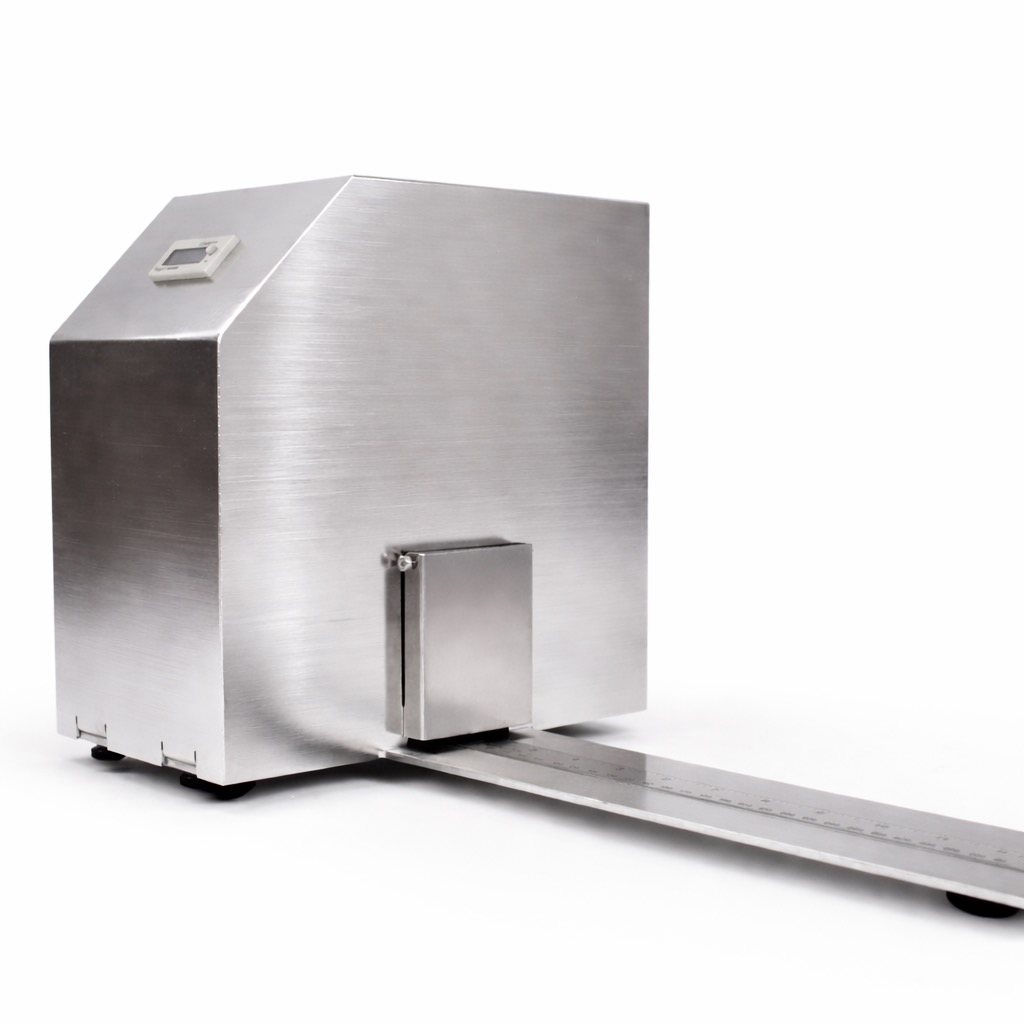
A cleaner cut helps create a better starting point for the rest of the process. We offer manual and pneumatic semi-automatic cutters for flexible plastic and rubber tubing, including silicone rubber, medical, and heat shrink tubing. Our cutters are designed for precision in both cleanroom and industrial environments.

To help prevent this defect:

  • Use a cutter matched to the tube material and diameter.
  • Replace dull blades before they begin crushing or dragging.
  • Use adjustable stops or scales when repeatable cut length is required.
  • Train operators to check cut angle and edge quality during production.

2. Over-Expanded Tubing

Expansion can make fitting insertion easier, but too much expansion can create another tubing assembly problem. If it is stretched beyond what the material can recover from, it may not grip the fitting as intended. Over-expansion can also weaken the tube end, create distortion, or make the final connection look inconsistent.

The goal is controlled expansion, not maximum expansion. Material, wall thickness, inner diameter, fitting size, and recovery behavior all matter. Softer tubing may need less force, while stiffer materials may require a more specialized approach.

We offer tubing expanders designed to perform controlled internal expansion on plastic and rubber tubing. Some models are built for larger tubes, while heated expanders can help prepare stiffer tubing for barbed fitting insertion.

3. Misaligned Fittings

Misalignment is another issue that can reduce tubing assembly quality. A fitting inserted at the wrong angle can stretch one side of the tube more than the other, damage the end, or create an uneven fit. This becomes even more important with complex components such as Y fittings, T fittings, elbows, unions, filters, manifolds, and multi-barb fittings.

Our fitting inserters, also known as tubesetters, are designed to insert plastic and metal fittings into flexible tubing. Their manual and semi-automatic tubesetters accommodate simple luer fittings as well as complex multi-barb geometries, including Y, T, elbow, and union fittings.

Good fixture design can help keep the tubing and fitting aligned throughout the insertion motion. This improves repeatability and reduces the amount of operator judgment needed for each part.

4. Inconsistent Insertion Depth

tubing assembly- fitting inserter CRD600

Even when the cut and alignment are correct, inconsistent insertion depth can create tubing assembly defects. One part may be fully seated while another stops short. This may happen when operators rely only on feel, especially during high-volume production or repetitive manual work.

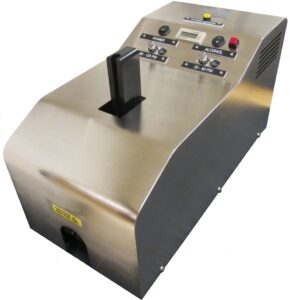
A repeatable insertion process helps each fitting land in the same position. Our CRD600 Automatic Fitting Inserter uses smart relay technology and pneumatic action to achieve precise, repeatable action, while helping improve throughput and reduce repetitive stress hand injuries during tubing assembly.

To improve consistency, manufacturers should define the target insertion depth, use equipment that controls the insertion stroke, and inspect early production samples before running larger batches.

5. Damaged Tubing Ends

Damaged ends can come from dull cutters, improper clamping, excessive force, poor alignment, or rough handling. In tubing assembly, even small nicks, crushed areas, or stretched ends can make fitting insertion less reliable.

Prevention starts with choosing tools that support the tubing instead of fighting against it. Properly sized jaws, controlled motion, and clean cutting surfaces can all reduce damage during production. Operators should also check tube ends before expansion or insertion so defects are caught early instead of carried into the final assembly.

Building a More Reliable Tubing Assembly Process

Defects are often caused by small inconsistencies that add up over time. A reliable tubing assembly process should include clean cutting, controlled expansion, proper fitting alignment, consistent insertion depth, and regular equipment checks.

For manufacturers working in cleanroom, medical device, industrial, or high-volume production environments, the right tooling can make the process easier to control. At Clean Room Devices, we support this type of repeatability with cutters, expanders, fitting inserters, and related equipment designed for precision where tubing and fittings come together.