
How to Choose the Right Tube Cutter for Your Production Workflow

Choosing the right tube cutter can make a meaningful difference in production speed, operator comfort, and cut consistency. In cleanroom, medical device, and manufacturing environments, tubing is often cut repeatedly throughout the day, so the equipment needs to match the application. Clean Room Devices offers several cutter styles, including electro-pneumatic, pneumatic, specialty, and manual options, each designed to support accurate tubing preparation in different production settings.
Why Tube Cutter Selection Matters
A clean, consistent cut helps prepare tubing for the next step in the process, whether that step involves expansion, fitting insertion, bonding, inspection, or packaging. When cuts are uneven, crushed, or inconsistent in length, it can slow production and create unnecessary rework.
Our tubing cutters are used for medical tubing, flexible tubing, plastic tubing, silicone rubber, heat shrink tubing, PVC, urethane, thermoplastics, and other flexible materials. They are designed for precision and speed, and many models include stainless steel blades for cleanroom-compatible cutting. That makes tube cutter selection especially important for teams that need repeatable results across different tubing materials and production volumes.
Understanding the CRD100, CRD120, and CRD130
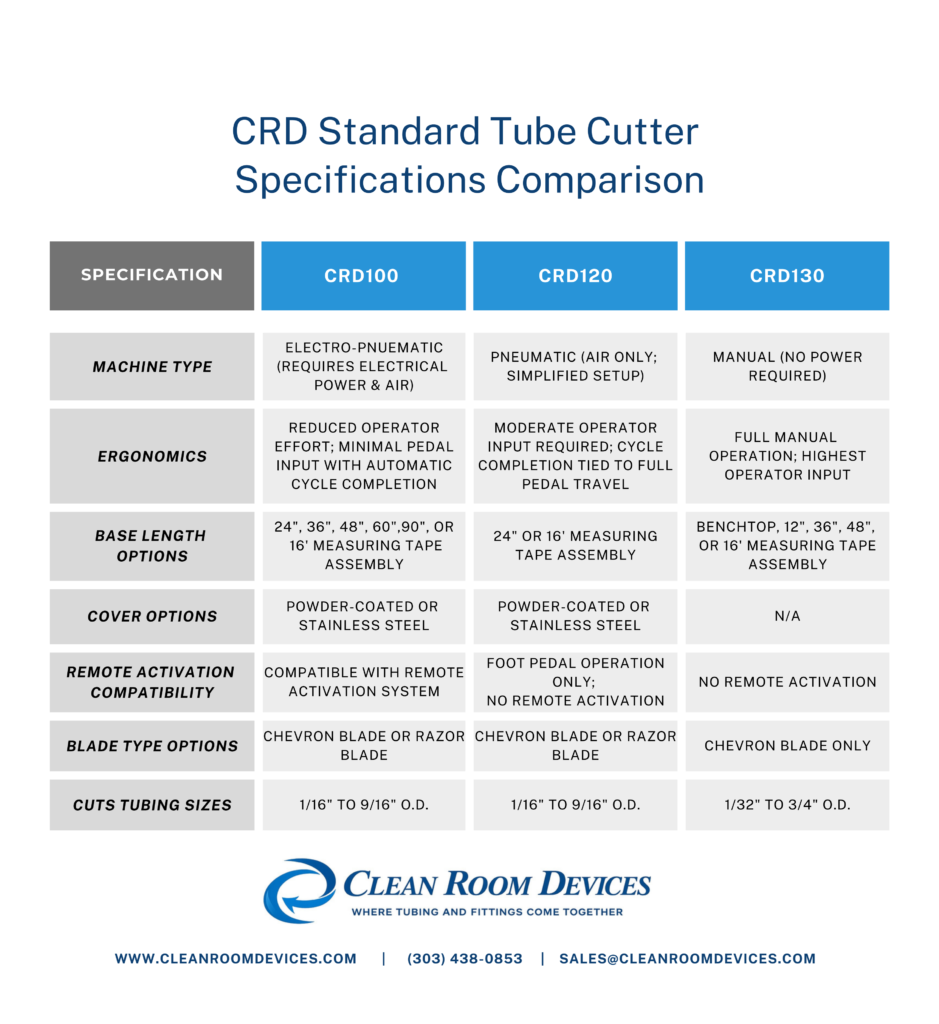
The CRD100 is an electro-pneumatic cutter, which means it requires both electrical power and compressed air. It is designed for reduced operator effort, using minimal pedal input with automatic cycle completion. This makes it a strong fit for production environments where repetitive cutting is common and operator comfort is a priority.
The CRD120 is pneumatic, meaning it requires air only. Compared with the CRD100, it offers a simplified setup while still supporting higher-volume cutting needs. The chart notes that the CRD120 requires moderate operator input, with cycle completion tied to full pedal travel.
The CRD130 is manual and requires no power. It has the highest operator input of the three, but it may be a practical choice when a no-power setup is preferred or when cutting needs are more flexible, lower-volume, or bench-based.
Key Differences at a Glance
Each tube cutter is designed for a different type of workflow. Before comparing advanced features, it helps to look at the basic setup requirements:
- CRD100: Electro-pneumatic, requiring electrical power and air
- CRD120: Pneumatic, requiring air only
- CRD130: Manual, requiring no power
For a facility already equipped with compressed air and electrical access, the CRD100 may offer ergonomic and production advantages. For teams that want to simplify setup while still using a powered cutting action, the CRD120 may be a better fit. For labs, prototype areas, or shops where power and air are not available, the CRD130 offers a manual alternative.
When an Automatic Tubing Cutter Makes Sense
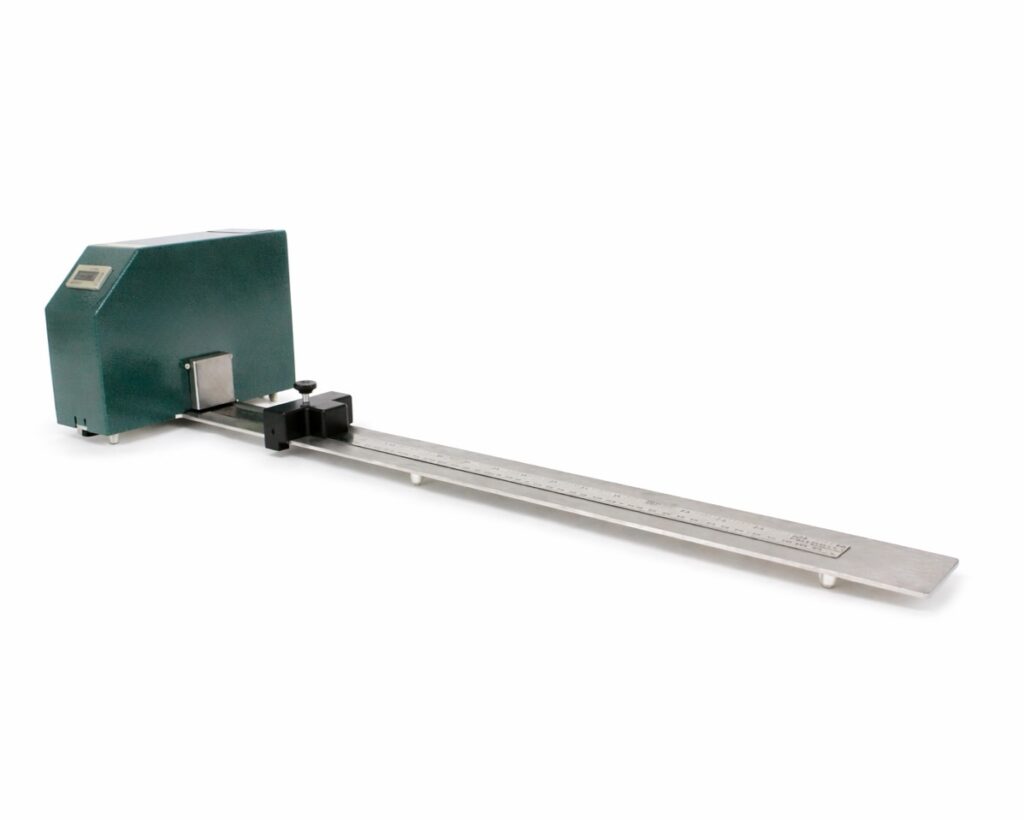
An automatic tubing cutter or semi-automatic cutter can be helpful when the same cutting task is repeated many times. Our CRD100 is a semi-automatic, electro-pneumatic tabletop device engineered for precision and rapid performance in production settings. It is equipped with an electric foot pedal and is ergonomically designed for ease of use.
This type of cutter can help reduce the amount of operator effort required during repetitive work. It may also support a more consistent cutting rhythm because the cycle completion is controlled by the machine rather than fully dependent on manual force.
An automatic tubing cutter may be worth considering when a workflow includes:
- Repetitive cutting throughout the workday
- Higher-volume production runs
- A need for reduced operator effort
- Consistent cut timing from cycle to cycle
- Production areas with available electrical power and compressed air
The CRD120 also supports production work as a semi-automatic pneumatic tabletop cutter. It is designed for precision and speed, but uses compressed air only. For teams comparing powered options, the choice may come down to available utilities, preferred activation method, and how much operator input is acceptable for the workflow.
Tubing Size, Blade Options, and Cut Length
When choosing the right option, the best specifications depend on how the cutter will be used day to day. Tubing size is one of the first things to confirm because each cutter is designed for a specific outside diameter range. From there, blade type matters based on the material being cut and the edge quality needed for the next step in the process.
Cut length and workspace should also guide the decision. Some production setups may need longer measuring capability for repeatable cuts, while others may benefit from a more compact benchtop option. We offer different base length and measuring tape assembly options across the CRD100, CRD120, and CRD130, giving teams flexibility based on their workflow.
Questions to Ask Before Choosing a Cutter
Before selecting a tube cutter, production teams should review the process as a whole, not just the machine type. A few helpful questions include:
- What tubing O.D. range needs to be cut?
- Will the cutter be used for low-volume, prototype, or production work?
- Is compressed air available in the work area?
- Is electrical power available or preferred?
- How much operator input is acceptable?
- Are chevron blades, razor blades, or both needed?
- Does the workflow require remote activation compatibility?
These questions can help narrow the choice between a manual, pneumatic, and automatic tubing cutter.
Matching the Cutter to the Workflow
The best tube cutter depends on the material, tubing outside diameter, production volume, workspace, and operator needs. At Clean Room Devices, we offer a wide range of tubing cutters for cleanroom, medical, industrial, and manufacturing environments. By comparing machine type, ergonomics, tubing size, blade options, and setup requirements, production teams can choose equipment that supports cleaner cuts, smoother workflows, and more repeatable results.